

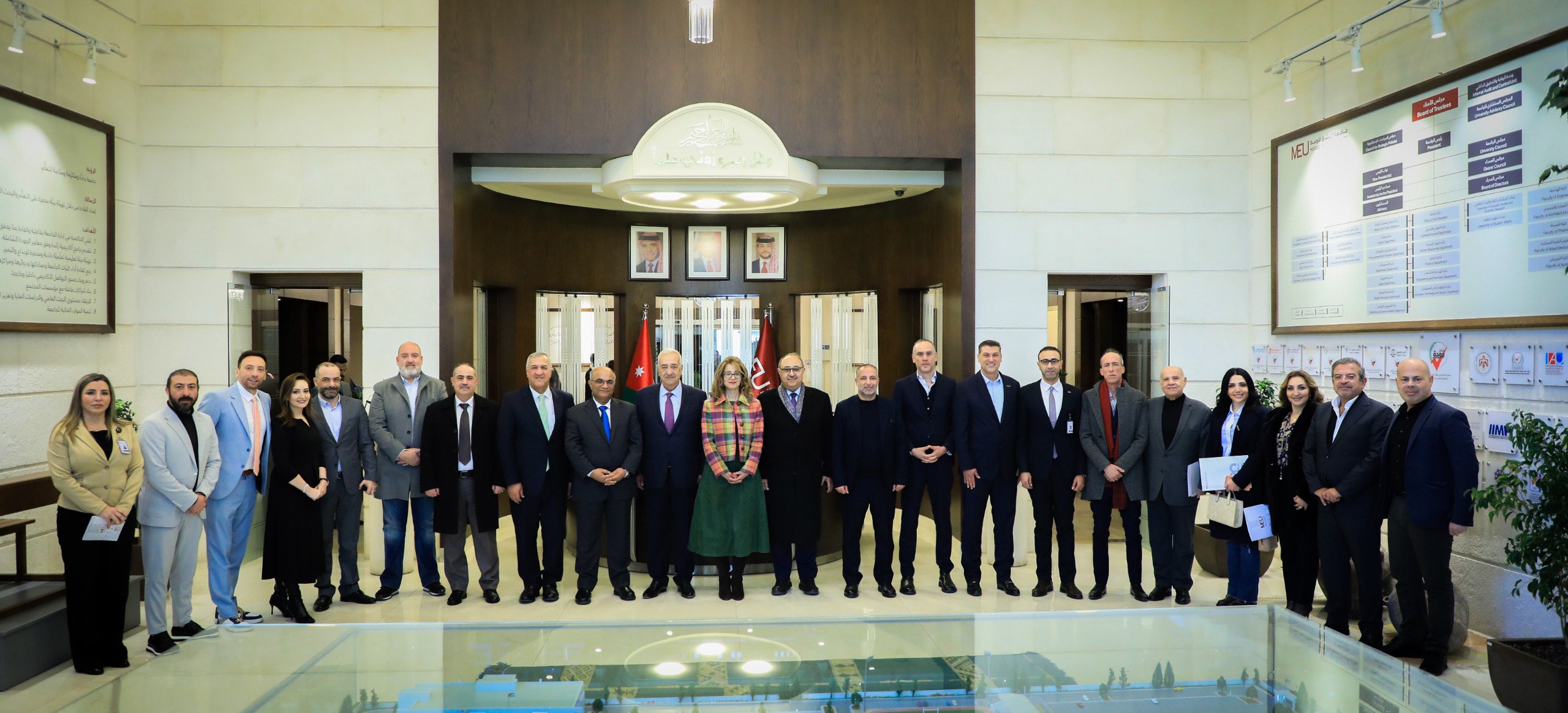
The Faculty of Media recently convened its Advisory Board meeting, featuring a distinguished assembly of media leaders and national experts. The primary objective was to reposition the faculty’s educational philosophy to align with the rapid transformations within the media sector, particularly regarding the rise of artificial intelligence, evolving patterns of media production and consumption, and the integration of cross-border digital platforms.
The meeting was attended by the Chairman of the university’s Board of Trustees, Dr. Yacoub Nasereddin; the President of the University, Professor Salam Al-Mahadin; and the Dean of the Faculty of Media, Dr. Ramez Abu Hasira. Discussions focused on the future of media education and the profound challenges facing the profession. They also emphasised the development of academic programmes that are flexible and innovative, capable of producing graduates who possess critical thinking skills, mastery of digital tools, and a conscious understanding of AI technologies and ethics.
Dr. Nasereddin stated that the university seeks to solidify the Faculty of Media’s position as a leading institution that invests in educational quality, attracts top-tier talent, and develops an academic environment capable of keeping pace with major shifts in the media industry. Similarly, Professor Al-Mahadin highlighted that the faculty represents a strategic pillar of MEU’s mission, stressing that media is viewed as a vital tool for raising awareness, shaping responsible public opinion, and promoting professional and ethical values.
Chaired by Prof. Hani Al-Badri, a faculty member and prominent media professional, the board issued several pivotal recommendations. These focused on the necessity of modernising curricula to reflect successive digital developments, integrating AI applications into media education, and enhancing skills related to critical thinking, fact-checking, and solutions journalism. Furthermore, the board advocated for expanding partnerships with media institutions and intensifying practical training to ensure graduates are prepared for a competitive labour market.
The board also addressed the ethical and professional challenges facing media practitioners amidst the accelerated flow of information, growing political and economic pressures, and the proliferation of misleading content. The importance of entrenching professional ethics and establishing clear admission criteria for media specialisations was underscored to ensure the recruitment of students who demonstrate awareness, passion, and social responsibility.
What the session included was an in-depth dialogue with students from the Faculty of Media, reflecting their direct interest in digital transformation, content creation, and AI. This engagement allowed students to participate in shaping the future vision of media education.
Based on its significance, the meeting witnessed the participation of former Minister of State for Media Affairs, Eng. Sakher Dudin, and former Minister of Culture, Ms, Haifa Najjar.
In addition, the meeting featured the attendance of representatives from various media organisations and national institutions, including the Media Commission, the Jordan Press Association, Jordan Television, the Ministry of Government Communication, Amman TV, the Jordan News Agency (Petra), the Royal Film Commission, Al-Mamlaka TV, Al-Ghad, Ad-Dustour, The Jordan Times, Telescope Media Group, Hayat FM, Ain TV, and Al-Hadath Plus, alongside representatives from the local community.