

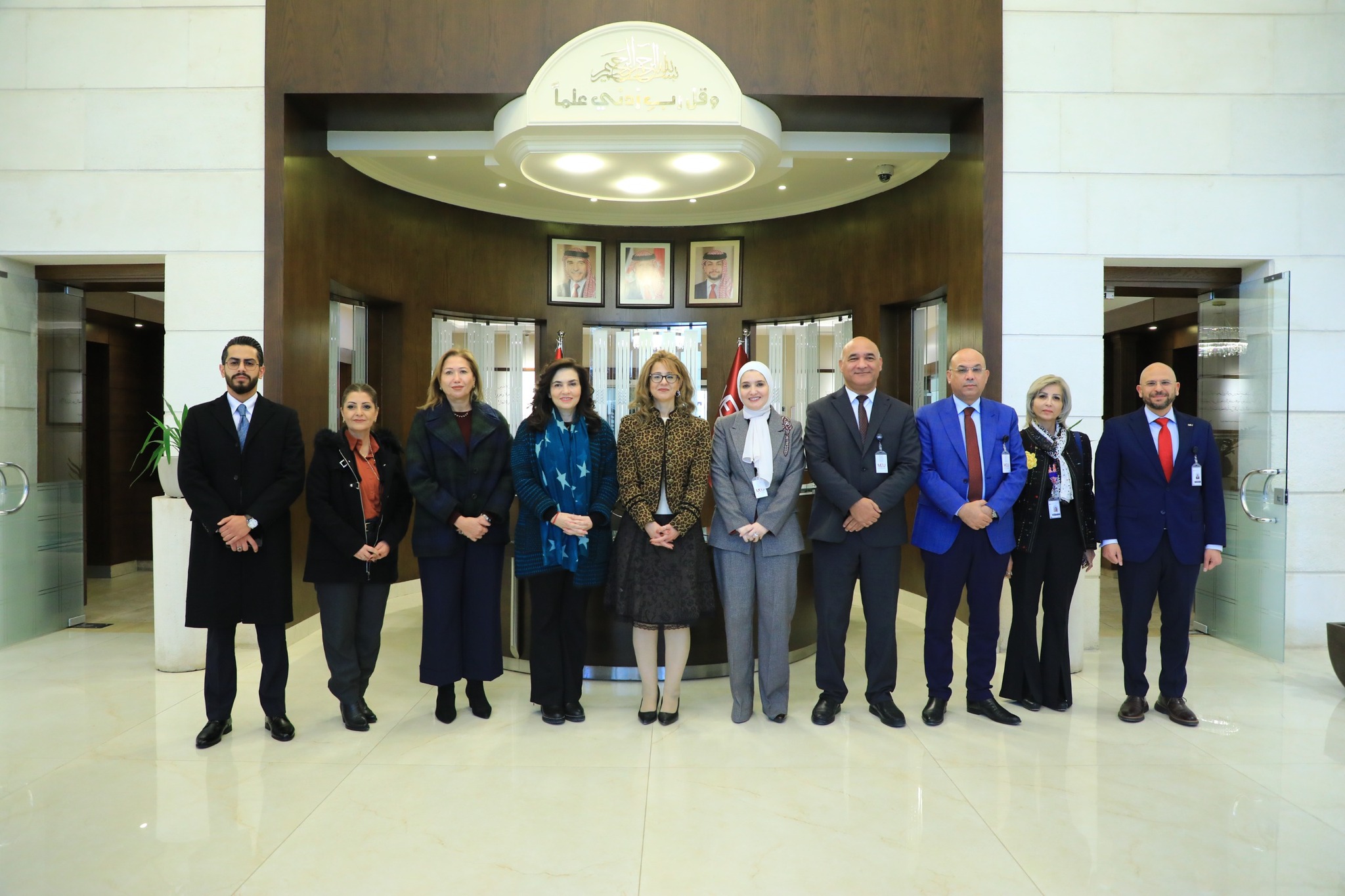
Middle East University and the Princess Taghrid Institute for Development and Training signed a Memorandum of Understanding aimed at enhancing joint cooperation in the fields of vocational training, psycho-educational support, and the empowerment of various community groups through specialised educational and training programmes.
Signing the Memorandum of Understanding formally documented the agreement between the university and the institute, with the university’s president, Professor Salam Khalid Al-Mahadin, and the institute’s general manager, Dr. Aghadeer Jweihan, acting as the respective signatories.
Professor Al-Mahadin, in the presence of MP Prof. Tamara Nasereddin and a number of university officials and representatives, stated that the signing of this memorandum embodies Middle East University’s belief in its national role in supporting the most needy groups and expanding partnerships that enhance students’ academic and practical capabilities. She also noted that cooperation with the Princess Taghrid Foundation will enable the university to engage in quality programmes that contribute to empowering disadvantaged groups, supporting diagnostic and psychological support services, and developing a vocational training system within a specialised and reliable work environment.
In her remarks, Dr. Jweihan, in the presence of several representatives of the institute, stressed the importance of building effective partnerships with leading academic institutions. She emphasised that the institute is a national entity concerned with empowering families, orphans, and those lacking family support, and that cooperation with Middle East University will pave the way for developing joint training programmes and community initiatives that combine the academic aspect with practical fieldwork, serving broader community needs.
Accordingly, this collaboration aims to establish a joint framework between the two parties, which includes accrediting professional courses and diplomas, organising training programmes for university students, and implementing community campaigns and specialised lectures on mental health and social support, in addition to developing joint research projects, credited social responsibility programmes, and coordinating the training of final-year students from various disciplines.