
The distinguished Arab screenwriter and author, Dr. Midhat Al-Adl, asserted that Arab drama constitutes one of the most potent instruments of soft power, capable of reshaping societal consciousness and forging the Arab collective psyche. He emphasised that art has evolved into an active catalyst in structuring the cultural and intellectual identity of nations.
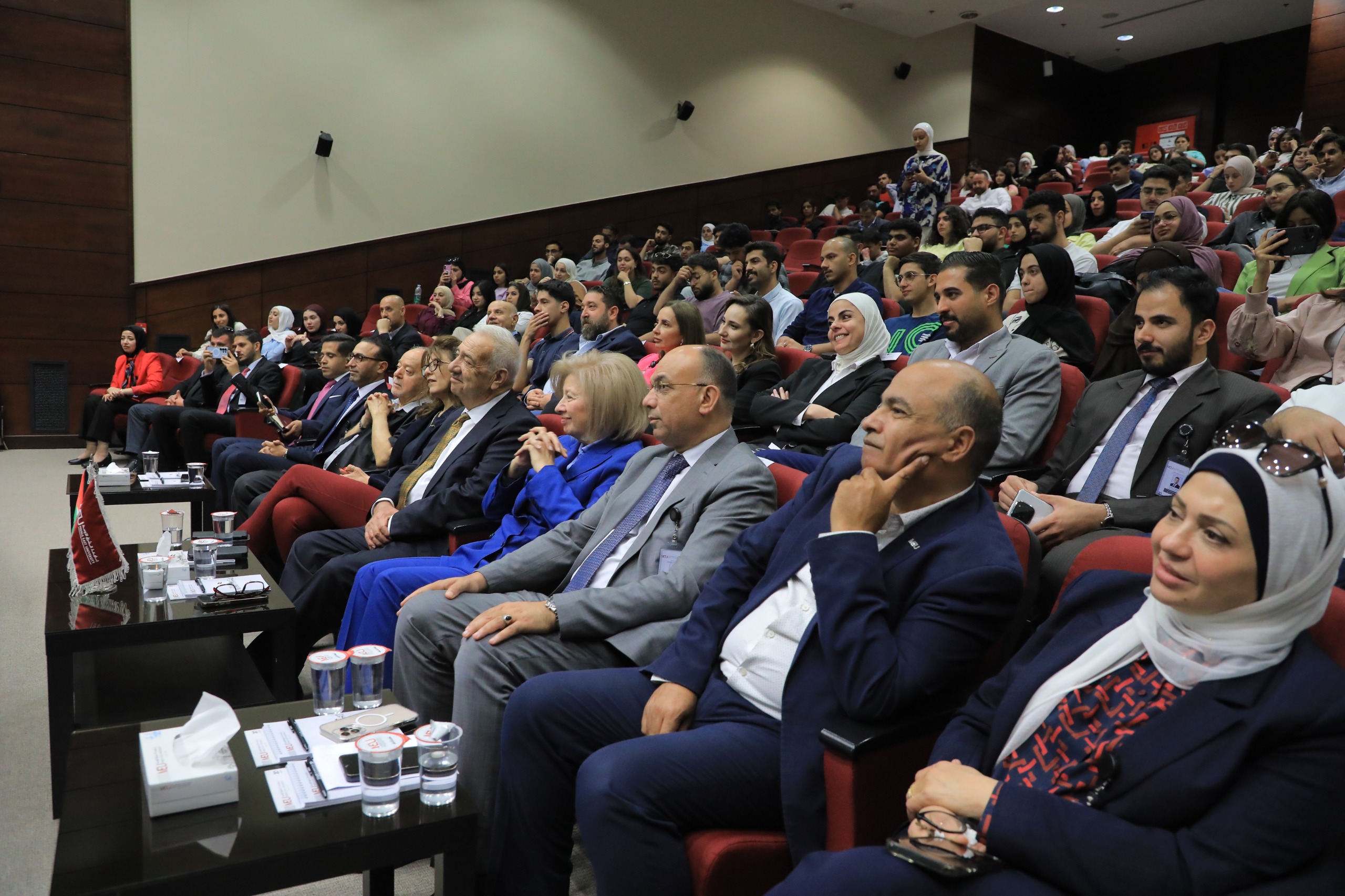
Convened within the prestigious ‘Middle East University Dialogues’ platform, the panel discussion, entitled “Arab Drama: Horizons of Soft Power”, was attended by the Chairman of the Board of Trustees, Dr. Yacoub Nasereddin; the President of the University, Professor Salam Al-Mahadin; former Minister of Culture, Dr. Haifa Al-Najjar; former Minister, Dr. Ibrahim Badran; and the prominent Jordanian producer, Mohammad Al-Majali, alongside university deans, academic and administrative staff, and an expansive student assembly.
During the session, which was moderated by the veteran media figure Prof. Hani Al-Badri, Dr. Al-Adl noted that the socio-political transformations sweeping the Arab region have imposed formidable responsibilities upon dramatic arts. These mandates transcend traditional aesthetic frameworks, positioning drama as a vital arena for articulating human struggles, defending core values, and countering attempts to dilute cultural identity or distort public awareness.
Focusing on the ethical imperatives of the craft, Al-Adl stated that conscience represents the definitive metric of merit for any dramatic or cinematic endeavour, underscoring that “conscience is paramount; it is the sole arbiter that imparts genuine value to one’s creative output”. He further evaluated the contemporary challenges confronting Arab production, chief among which are rapid technological disruptions, the ascendancy of digital streaming platforms, and shifting audience consumption patterns. These dynamics, he argued, necessitate the evolution of artistic discourse to remain contemporary while safeguarding content integrity.
Contributing to the discourse, Dr. Al-Najjar emphasised the strategic imperative of investing in culture as a civilisational asset that fortifies the global projection of Arab societies. Concurrently, Dr. Badran commended MEU’s commitment to fostering an institutional environment receptive to intellectual discourse and creativity, observing that “the true challenge lies not merely in the attainment of success but in sustaining the path thereafter”.
Synthesising the institutional vision, the Chairman of the Board of Trustees, Dr. Yacoub Nasereddin, affirmed that Arab drama and soft power have long formed an intrinsic component of the region’s cultural repository, consolidating collective memory and national belonging. He remarked that generations of Arab citizens were nurtured on literary and cinematic masterpieces that carried profound humanistic messages, which actively shaped their ethical and intellectual frameworks.
Dr. Nasereddin concluded by stating that MEU’s core philosophy is predicated on cultivating the “Knowledge-Driven Student”—an individual equipped with the mechanisms of critical thinking, logical analysis, and an enlightened openness to diverse global cultures. He remarked that, while previous generations drew their cultural literacy from classical Arab novels, cinema, and music, contemporary realities necessitate a modern generation of Arab soft power capable of navigating the digital era while firmly embedding the values of awareness, liberty, and fundamental human rights within the Arab consciousness.
Genuinely, the forum culminated in an extensive, high-level interactive dialogue with students and faculty members, addressing the path of Arab drama, the impact of digital media on societal awareness, and the role of art in defending cultural sovereignty against contemporary intellectual currents.